
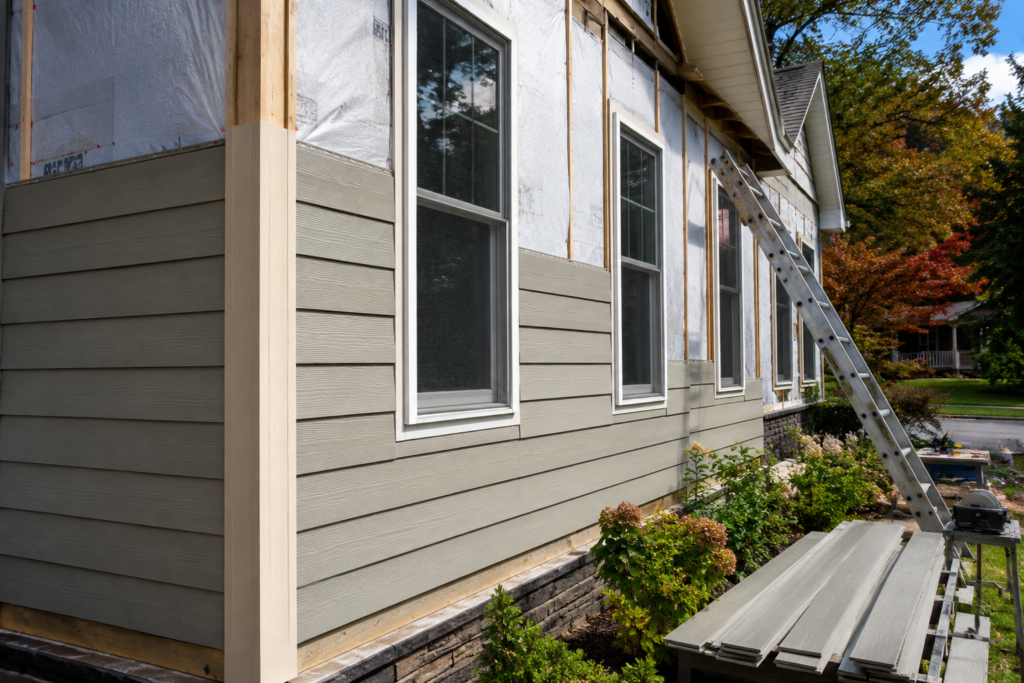
Exteriors do more than define curb appeal. They protect a house from years of sun, wind, rain, humidity, and other insect/microbial invasions. That is where the decision becomes less cosmetic.
Although old siding might have faded and become somewhat unsightly, loose panels and soft corners can become problem areas. In addition to this, faded siding might not successfully shed water. As a result, siding gaps appear and moisture can start to enter the house. There are a multitude of minor issues that can occur in exterior siding. These issues combined can decrease the protection your siding provides to your home.
The uneven aging of siding
Not all sides of a house are equally affected by the sun. Moisture gets trapped on the sides that are constantly shaded. Sunny sides experience more sun exposure and therefore fade quicker. Siding that is exposed to continuous heavy rain and wind can deteriorate and become worn.
Since siding does not age evenly, a single siding panel can appear fine while the panel next to it has begun to age much faster. This can make it difficult to detect areas of concern on a home, especially when older siding panels begin to curl, crack, loosen, or stain. Corners, trim, and siding close to gutters and the edge of a roof often begin to show signs of aging before the rest of the siding panel.
This is why we need to look beyond the front of the house when we evaluate siding. The quieter sides tell their own story.
More than just physical appearance
For most homes, replacing sidings goes beyond bringing back the lost colors. It brings to light what lies underneath. Siding replacements provide the opportunity to evaluate the condition of the wall, the moisture barrier, as well as trim work. Siding covers many of the house’s components. Being an integral part of the system, it is replaced together with or precedes the house wrap, flashing, caulking, trim, windows, doors, gutter, and the roof.
Each component plays its part in protecting the integrity of the system. It is, therefore, not sufficient to replace sidings to remedy the effects of water penetration.
The best combination of an updated exterior and improved comfort
Improving the siding can also improve the comfort levels of the home. While not an insulator on its own, the condition of the exterior can contribute to the levels of comfort that a home can provide. Gaps, loose components, damaged trim and old, worn seams can let drafts and moisture escape into areas of the home that should remain sealed. There are multiple factors that contribute to cold drafts of air in a home including aging siding.
During a replacement, a wall assembly can be inspected for problems. This may be beneficial for finding places where air or moisture has been entering the wall cavity. It can also be an opportunity to address an issue that may be small, but can improve the overall feel of the house by making it feel less exposed.
Signs the siding may be beyond small repairs
Not all instances of damaged siding warrant a full replacement. It may be the case that a single panel or small trim issue is repairs. However, when issues begin to appear on multiple walls, it leads to a more significant discussion.
Siding also begins to crack and warp as it begins to reach the end of its useful life. Warped siding also begins to show other signs such as extended sections of loose siding, widespread siding that has become faded, soft spots, and moisture staining. Repairs be it repeated patching may, in fact, warrant a full replacement.
There is also the issue of matching. When the different sections of siding begin to fade over time, blending new replacement sections can be frustrating. While repairs solve the short-term problem, over time, the patchwork exterior will become more apparent.
Just because replacement is the most noticeable option, doesn’t mean it should be the first option. The situation should be assessed as a whole.
Choosing siding that fits the house
Different siding materials work differently on different types of houses. Vinyl siding is different from cedar or fiber cement. The materials all have their different weights, maintenance requirements, effects of the environment, and how they respond to the weather. The best choice for a house is going to be different from the options next door.
Simplicity can translate into beauty. Slightly more ornate siding can work on different houses in different neighborhoods. At the end of the day, simplicity and a clear choice works better than a lot of options.
Strong design relies on a good foundation
For all their benefits, different siding types are still fairly neutral. It doesn’t take long for corners, seams, shaded areas to begin moisture issues. Eventually, moisture problems will be clear to see.
The product is meant to complement the roof, gutters, windows, and doors. It should also match the landscaping.
A lesser approach can be the best approach.
Replacement involves more than just appearance. It can mean more water efficient functions or improved methods of removing water from the wall surface, as well as eliminating small deficiencies in the exterior of the house that tend to build over time.
A house does not need to have a neglected appearance for the siding to be ready for replacement. Sometimes, a house looks tired and worn that even repair cannot improve.